Introduction
Phenylketonuria, commonly known as PKU, is a rare inherited metabolic disorder that affects the body’s ability to process phenylalanine, an amino acid found in protein-containing foods. Without appropriate treatment, phenylalanine can accumulate in the bloodstream and damage the brain, potentially causing intellectual disability, behavioral problems, and neurological complications.

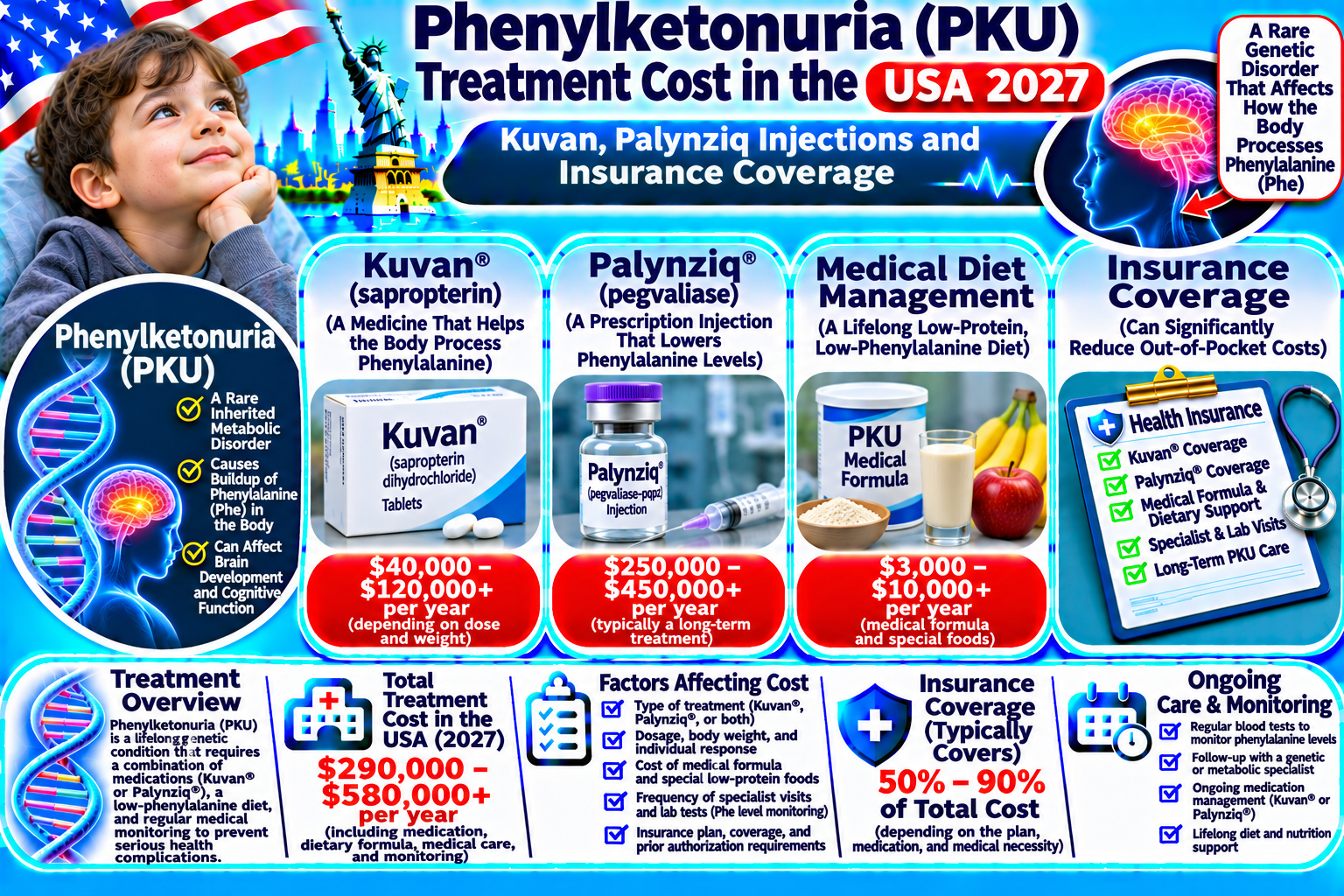
Understanding phenylketonuria treatment costs in the USA in 2027 is important for families comparing Kuvan medication, Palynziq injections, specialized medical formulas, low-protein foods, laboratory monitoring, and health insurance coverage.
PKU treatment often begins shortly after birth and continues throughout life. While dietary management remains essential, some patients benefit from prescription medications that help reduce blood phenylalanine levels.
This guide examines estimated American PKU treatment expenses for 2027, including medication prices, diagnostic testing, nutrition services, specialty pharmacy costs, insurance benefits, and financial assistance.
What Is Phenylketonuria?
Phenylketonuria is usually caused by disease-associated variants in the PAH gene, which provides instructions for producing the enzyme phenylalanine hydroxylase.
This enzyme normally converts phenylalanine into tyrosine. When enzyme activity is insufficient, phenylalanine accumulates and can interfere with normal brain development and neurological functioning.
PKU is generally inherited in an autosomal recessive pattern. An affected child typically inherits a disease-causing PAH variant from each biological parent.
Early diagnosis and consistent treatment can prevent many serious complications.
Common Symptoms of Untreated PKU
- Developmental delays.
- Intellectual disability.
- Behavioral and attention difficulties.
- Seizures in severe cases.
- Unusual body or breath odor.
- Skin problems such as eczema.
- Movement or coordination difficulties.
- Learning and memory problems.
Symptoms vary according to the degree of enzyme deficiency and the effectiveness of treatment. Many people diagnosed through newborn screening remain healthy when phenylalanine levels are appropriately controlled.
How Is PKU Diagnosed?
Newborn Screening
PKU is routinely included in newborn screening programs throughout the United States. A small blood sample collected shortly after birth is analyzed for abnormal phenylalanine levels.
Confirmatory Blood Testing
Additional blood tests measure phenylalanine and related amino acid levels to confirm an abnormal screening result.
PAH Genetic Testing
Genetic testing may identify disease-associated variants and support diagnosis, counseling, and treatment planning.
Metabolic Specialist Evaluation
A metabolic specialist evaluates laboratory findings, nutritional needs, family history, and the most appropriate management strategy.
PKU Treatment Options
Low-Phenylalanine Diet
Dietary management is the foundation of PKU treatment. Patients restrict phenylalanine intake while consuming enough nutrients for healthy growth and development.
The diet is individualized and supervised by a metabolic dietitian.
Specialized Medical Formula
Many patients require phenylalanine-free or low-phenylalanine medical formulas that provide essential amino acids, vitamins, and minerals.
Kuvan and Generic Sapropterin
Kuvan contains sapropterin dihydrochloride, a synthetic form of tetrahydrobiopterin, or BH4. It can lower blood phenylalanine in patients whose PKU responds to this treatment.
Not every patient responds to sapropterin, so treatment effectiveness must be evaluated through appropriate monitoring.
Palynziq Injections
Palynziq contains pegvaliase-pqpz, an enzyme therapy administered through subcutaneous injections. It is used for eligible patients whose phenylalanine levels remain inadequately controlled despite existing management.
Palynziq requires careful safety monitoring because serious allergic reactions, including anaphylaxis, can occur.
Sephience
Sephience contains sepiapterin and is an additional FDA-approved oral treatment for patients with sepiapterin-responsive PKU.
It is used alongside a phenylalanine-restricted diet, with treatment suitability determined by a specialist.
Phenylketonuria Treatment Cost in the USA in 2027
PKU treatment expenses depend on dietary requirements, medication selection, patient weight, blood testing frequency, specialist consultations, and insurance coverage.
Some patients manage their condition primarily through medical nutrition therapy. Others require costly prescription medications and additional monitoring.
The following figures are hypothetical 2027 budgeting ranges, not verified national averages, guaranteed pharmacy quotations, or actual insurance-adjusted patient payments.
Estimated USA PKU Treatment Cost Breakdown
| Treatment or Service | Estimated Cost (USD) |
|---|---|
| Metabolic Specialist Consultation | $200–$800 per visit |
| Confirmatory Blood Testing | $100–$500 per testing episode |
| PAH Genetic Testing | $400–$2,500 |
| Medical Formula | $300–$1,500 monthly |
| Special Low-Protein Foods | $150–$600 monthly |
| Dietitian Consultation | $100–$400 per visit |
| Kuvan or Sapropterin | $2,000–$18,000+ monthly |
| Palynziq Treatment | $10,000–$45,000+ monthly |
| Sephience Treatment | Individual pharmacy quotation required |
| Emergency Allergy Treatment | $1,000–$10,000+ |
| Hospitalization for Complications | $8,000–$40,000+ |
These amounts are illustrative planning estimates. Prescription costs vary considerably with body weight, dosage, treatment phase, pharmacy arrangements, and insurance contracts. Emergency and hospital expenses are not routine costs for every patient.
USA PKU Annual Cost Comparison
| USA Treatment Scenario | Illustrative Annual Budget |
|---|---|
| Dietary Management and Monitoring | $5,000–$25,000+ |
| Dietary Treatment With Sapropterin | $30,000–$240,000+ |
| Palynziq With Specialist Monitoring | $130,000–$550,000+ |
| Complex PKU With Additional Medical Care | Highly individualized |
These scenarios compare treatment approaches within the United States rather than different countries. They are not standardized medical packages, and overlapping expenses should not be counted twice.
Kuvan Treatment Costs
Kuvan is an oral prescription medication used for patients with BH4-responsive phenylketonuria. It works by improving the activity of phenylalanine hydroxylase, allowing some patients to process phenylalanine more effectively.
Medication requirements depend on body weight, prescribed dosage, and treatment response. Generic sapropterin may offer a lower-cost alternative when appropriate and available.
Patients require regular phenylalanine monitoring. Kuvan is used alongside dietary management rather than automatically replacing a low-phenylalanine diet.
Palynziq Injection Expenses
Palynziq is a specialty enzyme treatment for eligible patients with inadequately controlled PKU. Treatment begins with a gradual dose-escalation schedule, followed by individualized maintenance dosing.
The annual expense depends on the number and strength of injections required. Higher maintenance doses can substantially increase medication costs.
Additional expenses may include specialist consultations, blood testing, injection training, and medications used to manage allergic reactions.
Palynziq carries a boxed warning for anaphylaxis and is distributed through a restricted safety program. Patients must receive appropriate education and have access to prescribed emergency epinephrine.
Specialized Medical Formula Costs
Medical formula is an essential nutritional resource for many individuals with PKU. It provides protein equivalents without excessive phenylalanine.
Formula requirements change with age, body size, pregnancy, nutritional status, and individual tolerance.
Insurance coverage varies, making formula expenses an important part of long-term financial planning.
Low-Protein Food Expenses
Specialized low-protein pasta, bread, baking ingredients, and other products may cost considerably more than conventional groceries.
Families often need to purchase these products from specialty suppliers.
Food expenses depend on dietary prescriptions, household needs, product availability, and state assistance programs.
Laboratory Monitoring Costs
Regular blood phenylalanine testing is essential for evaluating treatment effectiveness and nutritional safety.
Testing frequency varies according to age, metabolic control, pregnancy status, and medication adjustments.
Some patients use home blood collection kits that are processed by specialized laboratories.
Insurance plans may cover testing supplies and laboratory services differently.
PKU Treatment During Pregnancy
Pregnancy requires particularly careful management of maternal PKU because elevated phenylalanine can harm fetal development.
Patients may need frequent blood testing, specialized nutritional counseling, and close coordination between metabolic and obstetric specialists.
Medication decisions during pregnancy require individualized medical assessment.
Additional appointments and nutritional requirements may increase expenses during pregnancy.
PKU Treatment With Health Insurance
Many American health insurance plans cover medically necessary PKU testing, specialist appointments, and eligible prescription medications.
However, medical formula and specialized food coverage differ substantially between policies and states.
Important insurance considerations include:
- Prescription drug formulary coverage.
- Prior authorization for Kuvan or generic sapropterin.
- Palynziq eligibility requirements.
- Specialty pharmacy participation.
- Medical formula coverage.
- Blood phenylalanine testing benefits.
- Annual deductible and out-of-pocket maximum.
- Copayments and coinsurance.
Patients should request written confirmation of coverage before beginning expensive specialty treatment.
Medicare and Medicaid Coverage
Medicare may cover qualifying PKU services for eligible beneficiaries under applicable medical and prescription drug benefits.
Medicaid may cover treatment for eligible patients, but benefits and nutritional product coverage vary by state.
Families should verify coverage for medical formula, laboratory testing, and specialty medications separately.
Financial Assistance for PKU Patients
Some pharmaceutical manufacturers offer patient assistance programs for eligible individuals using expensive prescription treatments.
Rare disease organizations, metabolic clinics, and hospital financial counselors may also help patients identify support.
Eligibility requirements differ, and manufacturer copayment assistance may be restricted for patients receiving federal healthcare benefits.
Factors Influencing PKU Treatment Prices
1. Medication Selection
Kuvan, generic sapropterin, Palynziq, and Sephience have different pricing structures and eligibility requirements.
2. Patient Weight
Weight-based medication dosing can significantly affect prescription expenses.
3. Dietary Requirements
Medical formula and specialized low-protein food needs differ between patients.
4. Insurance Coverage
Deductibles, prior authorization, formulary restrictions, and nutritional benefits affect patient payments.
5. Monitoring Frequency
Frequent laboratory testing and specialist visits may increase annual costs.
6. Geographic Location
Specialist availability, laboratory pricing, and state nutritional coverage rules vary across the United States.
How to Reduce PKU Treatment Costs
- Verify insurance coverage for prescription medications.
- Ask whether generic sapropterin is appropriate.
- Request written specialty pharmacy estimates.
- Review medical formula benefits.
- Explore state nutritional assistance programs.
- Ask about manufacturer patient support.
- Use participating laboratories and specialists.
- Consult a metabolic clinic financial counselor.
Patients should not discontinue prescribed medication or substantially change their diet without specialist guidance.
Frequently Asked Questions
How much does PKU treatment cost in the USA in 2027?
Illustrative annual expenses range from several thousand dollars for dietary management to hundreds of thousands of dollars for selected specialty medication regimens.
Is Kuvan effective for every PKU patient?
No. Kuvan is effective only in patients whose condition responds to sapropterin. Specialists assess response using blood phenylalanine measurements.
How expensive are Palynziq injections?
Palynziq can cost hundreds of thousands of dollars annually before insurance adjustments, depending on dosage and treatment phase.
Does insurance cover PKU medical formula?
Coverage varies by insurer, policy, age, and state. Patients should verify benefits directly.
Can PKU be cured?
There is currently no established cure. Appropriate dietary management and medication can help maintain safer phenylalanine levels.
Is lifelong treatment necessary?
Yes. Lifelong management is generally recommended to protect neurological health and maintain metabolic control.
Conclusion
Phenylketonuria treatment costs in the USA in 2027 depend on Kuvan, Palynziq injections, medical formula, specialized foods, laboratory monitoring, and insurance coverage.
Families should compare complete treatment estimates, verify medication and nutritional benefits, and work closely with experienced metabolic specialists.
Early diagnosis, consistent dietary management, appropriate medication, and financial planning can help patients manage the long-term expenses associated with PKU.
Medical Disclaimer: This article provides general educational and financial planning information only. It does not replace professional medical advice, diagnosis, or treatment. All 2027 cost ranges are hypothetical estimates and should be verified directly with healthcare providers, pharmacies, specialty suppliers, and insurance companies.
