Introduction
Chronic inflammatory demyelinating polyneuropathy, commonly known as CIDP, is a rare autoimmune neurological disorder that affects the peripheral nerves. The condition develops when the immune system damages myelin, the protective covering surrounding nerve fibers. This damage can cause progressive muscle weakness, numbness, tingling, balance problems, and difficulty walking.

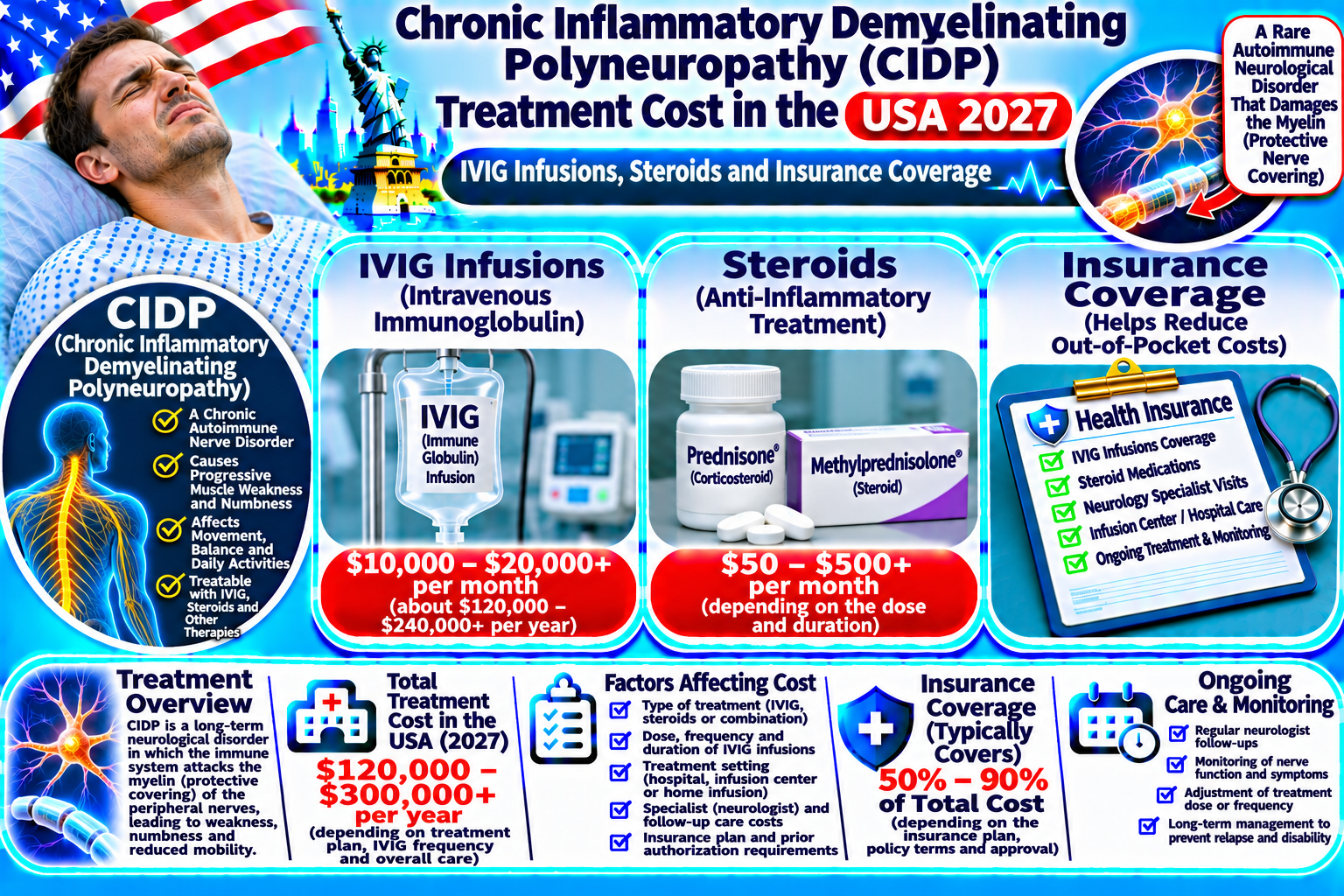
Understanding chronic inflammatory demyelinating polyneuropathy treatment costs in the USA in 2027 is important for patients comparing intravenous immunoglobulin infusions, corticosteroid medications, plasma exchange, specialty treatments, rehabilitation, and insurance coverage.
CIDP treatment expenses vary significantly depending on disease severity, medication selection, infusion frequency, hospital charges, and insurance benefits. Some patients respond to relatively affordable corticosteroids, while others require expensive immunoglobulin therapy or ongoing specialty medications.
This comprehensive guide explains estimated American CIDP treatment expenses for 2027, including diagnostic testing, IVIG infusions, steroid treatment, subcutaneous immunoglobulin, hospital expenses, insurance benefits, and financial assistance.
What Is Chronic Inflammatory Demyelinating Polyneuropathy?
CIDP is an immune-mediated disorder that causes inflammation and damage to peripheral nerve myelin. Peripheral nerves carry signals between the brain, spinal cord, muscles, and sensory organs.
When myelin becomes damaged, nerve signals travel less efficiently. Patients may develop weakness, sensory disturbances, reduced reflexes, and impaired coordination.
CIDP usually progresses or relapses over at least eight weeks, helping distinguish it from certain acute neurological disorders.
The condition can affect adults and children, although it is more commonly diagnosed in middle-aged and older adults.
Common Symptoms of CIDP
- Progressive weakness in the arms or legs.
- Numbness and tingling in the hands or feet.
- Difficulty walking or climbing stairs.
- Reduced or absent tendon reflexes.
- Problems with balance and coordination.
- Muscle fatigue and reduced endurance.
- Difficulty gripping objects.
- Neuropathic pain in some patients.
- Recurring episodes of neurological weakness.
Symptoms differ between patients. Some experience gradual progression, while others have periods of improvement followed by relapse.
How Is CIDP Diagnosed?
Neurological Examination
A neurologist evaluates muscle strength, sensation, reflexes, walking ability, and the distribution of weakness.
Nerve Conduction Studies
Nerve conduction testing measures how electrical signals travel through peripheral nerves. Findings suggesting demyelination are important for diagnosis.
Electromyography
Electromyography, or EMG, evaluates electrical activity in muscles and may help identify nerve-related abnormalities.
Cerebrospinal Fluid Testing
A lumbar puncture may be recommended in selected patients. Elevated cerebrospinal fluid protein can support the diagnosis but is not sufficient by itself.
MRI and Laboratory Testing
Imaging and blood tests may help identify supportive findings or exclude other causes of neuropathy.
Accurate diagnosis is essential because several neurological disorders can resemble CIDP but require different treatments.
CIDP Treatment Options
Intravenous Immunoglobulin
IVIG is a widely used first-line treatment for CIDP. It contains antibodies collected from donated human plasma and helps modify harmful immune activity.
Patients may receive an initial treatment course followed by maintenance infusions when continued therapy is necessary.
Corticosteroid Medications
Corticosteroids such as prednisone and methylprednisolone reduce inflammation and immune activity.
These medications are generally less expensive than IVIG but can cause significant adverse effects during prolonged treatment.
Subcutaneous Immunoglobulin
Subcutaneous immunoglobulin, commonly called SCIg, delivers immunoglobulin beneath the skin and may be used for maintenance treatment in suitable patients.
Plasma Exchange
Plasma exchange removes circulating immune components from the blood. It may be recommended when IVIG or corticosteroids are ineffective or unsuitable.
Vyvgart Hytrulo
Vyvgart Hytrulo contains efgartigimod alfa and hyaluronidase. It is an FDA-approved treatment for adults with CIDP and is administered through subcutaneous injections.
Physical Rehabilitation
Physical and occupational therapy can help improve mobility, balance, muscle function, and independence.
CIDP Treatment Cost in the USA in 2027
CIDP treatment expenses depend on the selected medication, dosage, patient weight, infusion setting, treatment frequency, and insurance coverage.
IVIG often represents the largest recurring expense. Corticosteroids generally have lower medication costs, although monitoring and treatment of side effects can add expenses.
The following amounts are illustrative 2027 budgeting estimates, not verified national averages, guaranteed hospital prices, or actual insurance-adjusted patient payments.
Estimated USA Treatment Cost Breakdown
| Treatment or Service | Estimated Cost (USD) |
|---|---|
| Neurologist Consultation | $200–$800 per visit |
| Nerve Conduction and EMG Testing | $500–$3,000+ |
| Lumbar Puncture and Laboratory Analysis | $500–$3,500+ |
| MRI Examination | $500–$4,000+ |
| Initial IVIG Treatment Course | $15,000–$50,000+ |
| Maintenance IVIG Infusion Course | $7,000–$30,000+ |
| Oral Corticosteroid Medication | $10–$150+ monthly |
| IV Corticosteroid Treatment | $300–$3,000+ per course |
| Subcutaneous Immunoglobulin | $80,000–$300,000+ annually |
| Vyvgart Hytrulo Treatment | $400,000–$800,000+ annually |
| Plasma Exchange Course | $10,000–$40,000+ |
| Physical Therapy Session | $100–$350+ |
| Hospitalization for Complications | $10,000–$70,000+ |
Important: These figures are broad planning ranges, not confirmed 2027 prices. Infusion course costs may already include medication and administration fees. Actual expenses vary substantially with dosage, insurance negotiations, and treatment duration.
USA CIDP Annual Treatment Cost Comparison
Because this guide focuses on the United States, the following table compares American treatment scenarios rather than different countries.
| USA Treatment Scenario | Illustrative Annual Budget |
|---|---|
| Corticosteroids and Routine Monitoring | $2,000–$15,000+ |
| IVIG Maintenance Treatment | $100,000–$450,000+ |
| Subcutaneous Immunoglobulin Maintenance | $90,000–$330,000+ |
| Vyvgart Hytrulo With Monitoring | $420,000–$850,000+ |
| Complex CIDP With Hospital Care | Highly individualized |
These scenarios are hypothetical examples rather than standardized medical packages. Patients do not necessarily require every treatment listed.
IVIG Infusion Costs for CIDP
Intravenous immunoglobulin is an established treatment for CIDP because it can reduce immune-mediated nerve damage and improve neurological function.
An initial IVIG course commonly involves a total dose of approximately 2 grams per kilogram, administered over several days.
Maintenance treatment is individualized. A commonly studied schedule is 1 gram per kilogram approximately every three weeks, although clinicians may adjust the dosage and interval.
IVIG expenses include medication acquisition, infusion nursing, equipment, monitoring, and facility charges.
Because immunoglobulin dosing depends on body weight, treatment costs can differ significantly between patients.
Hospital IVIG Versus Home Infusion
IVIG may be administered in hospital outpatient departments, independent infusion centers, or through supervised home infusion services.
Hospital treatment may involve higher facility charges, while home infusion can reduce travel and certain administrative expenses.
However, home treatment is not appropriate for everyone. Clinical stability, infusion reactions, insurance approval, and available nursing support influence the decision.
Corticosteroid Treatment Expenses
Prednisone and other corticosteroids are generally affordable compared with immunoglobulin therapy.
They can help reduce immune inflammation and improve muscle strength in selected patients.
However, long-term corticosteroid use may increase the risk of diabetes, osteoporosis, hypertension, infections, cataracts, and weight gain.
Patients may require additional laboratory testing, bone health assessments, and medications to manage treatment-related complications.
In some motor-predominant CIDP cases, corticosteroids may worsen weakness, making IVIG a preferred initial option.
Subcutaneous Immunoglobulin Costs
Subcutaneous immunoglobulin is an alternative maintenance treatment for suitable patients whose disease responds to immunoglobulin.
Products used in CIDP maintenance include Hizentra and Hyqvia, subject to their specific indications and prescribing requirements.
SCIg may allow greater treatment flexibility and reduce the need for frequent intravenous access.
Patients require training, appropriate supplies, and monitoring for local reactions and other adverse effects.
Vyvgart Hytrulo Specialty Drug Expenses
Vyvgart Hytrulo is a targeted immunotherapy that blocks the neonatal Fc receptor, reducing circulating immunoglobulin G antibodies.
It received FDA approval for adults with CIDP in 2024 and is administered through weekly subcutaneous injections.
Its total expense may include medication, healthcare professional administration, specialist appointments, and monitoring.
Potential adverse effects include infections, hypersensitivity reactions, and injection-site reactions.
Because this is a high-cost specialty treatment, insurance authorization and pharmacy coordination are particularly important.
Plasma Exchange Treatment Costs
Plasma exchange removes circulating immune components from the bloodstream and may benefit patients who do not respond adequately to other treatments.
A treatment course commonly involves several procedures over a limited period.
Costs depend on vascular access, specialized equipment, replacement fluids, hospital charges, and the number of exchanges.
Some patients require repeated treatment, but long-term plasma exchange schedules are individualized.
Hospital and Rehabilitation Expenses
Severe CIDP may cause substantial weakness, falls, or reduced mobility requiring additional medical support.
Hospital expenses may include neurological assessment, diagnostic testing, treatment administration, nursing care, and rehabilitation.
Physical therapy and occupational therapy help patients maintain strength, balance, coordination, and independence.
Mobility equipment such as braces, walkers, or wheelchairs may create additional costs.
CIDP Treatment With Health Insurance
Many comprehensive American health insurance plans cover medically necessary CIDP treatment, including neurological consultations, diagnostic testing, corticosteroids, and eligible immunoglobulin therapies.
However, IVIG, SCIg, and specialty medications often require prior authorization and documentation of clinical necessity.
Important insurance considerations include:
- Annual deductible and out-of-pocket maximum.
- IVIG authorization requirements.
- Home infusion coverage.
- Specialty medication formulary rules.
- Hospital and infusion center networks.
- Subcutaneous immunoglobulin benefits.
- Physical rehabilitation coverage.
- Copayments and coinsurance.
Patients should confirm medication and administration benefits separately whenever possible.
Medicare and Medicaid Coverage
Medicare may cover qualifying CIDP treatment for eligible beneficiaries under applicable medical necessity and benefit rules.
Medicare Part B may cover certain physician-administered medications and outpatient services. Coverage for home immunoglobulin treatment depends on specific eligibility requirements.
Medicaid may provide coverage for eligible individuals, although benefits and authorization rules vary by state.
Factors Influencing CIDP Treatment Prices
1. Treatment Selection
IVIG, corticosteroids, SCIg, plasma exchange, and targeted specialty medications have different pricing structures.
2. Patient Weight and Dosage
Weight-based immunoglobulin dosing affects medication quantities and total expenses.
3. Infusion Frequency
Repeated maintenance infusions can substantially increase annual treatment costs.
4. Treatment Location
Hospital outpatient departments, independent infusion centers, and home infusion providers may charge different amounts.
5. Insurance Coverage
Deductibles, negotiated rates, prior authorization, and network restrictions affect patient financial responsibility.
6. Disease Severity
Patients with advanced weakness may require additional rehabilitation, equipment, or hospital care.
How to Reduce CIDP Treatment Costs
- Verify insurance benefits before starting therapy.
- Request detailed IVIG cost estimates.
- Compare covered infusion locations.
- Review specialty medication authorization requirements.
- Ask about manufacturer assistance programs.
- Explore Medicare or Medicaid eligibility.
- Use in-network neurologists and infusion providers.
- Consult a hospital financial counselor.
Patients should not stop prescribed treatment or change infusion schedules without consulting their neurologist.
Frequently Asked Questions
How much does CIDP treatment cost in the USA in 2027?
Illustrative annual expenses may range from a few thousand dollars for corticosteroid-based management to several hundred thousand dollars for regular IVIG or specialty immunotherapy.
How expensive is IVIG for CIDP?
An initial IVIG course may cost tens of thousands of dollars before insurance adjustments. Ongoing maintenance infusions can create substantial annual expenses.
Are corticosteroids cheaper than IVIG?
Yes. Generic corticosteroid medications generally cost much less than IVIG, although monitoring and side-effect management can increase total expenses.
Does insurance cover CIDP treatment?
Many comprehensive insurance plans cover eligible treatments, but prior authorization and patient cost-sharing may apply.
Can CIDP be cured?
Some patients achieve prolonged remission, but CIDP does not have a guaranteed universal cure. Others require ongoing treatment to control symptoms.
Can patients receive IVIG at home?
Some clinically suitable patients can receive supervised home infusions when their healthcare team and insurance provider approve the arrangement.
Conclusion
Chronic inflammatory demyelinating polyneuropathy treatment costs in the USA in 2027 depend on IVIG infusions, corticosteroids, specialty medications, rehabilitation, hospital expenses, and health insurance coverage.
Patients should compare complete treatment estimates, verify insurance benefits, and work with experienced neurologists to select an appropriate treatment strategy.
Accurate diagnosis, timely treatment, careful monitoring, and financial planning can help patients and families manage the long-term expenses associated with CIDP.
Medical Disclaimer: This article provides general educational and financial planning information only. It does not replace professional medical advice, diagnosis, or treatment. All 2027 cost ranges are illustrative estimates and should be verified directly with healthcare providers, infusion centers, pharmacies, and insurance companies.
