Introduction
Gaucher disease is a rare inherited metabolic disorder that affects the body’s ability to break down certain fatty substances. These substances accumulate in cells, particularly within the spleen, liver, and bone marrow, causing complications such as enlarged organs, anemia, low platelet counts, and bone damage.

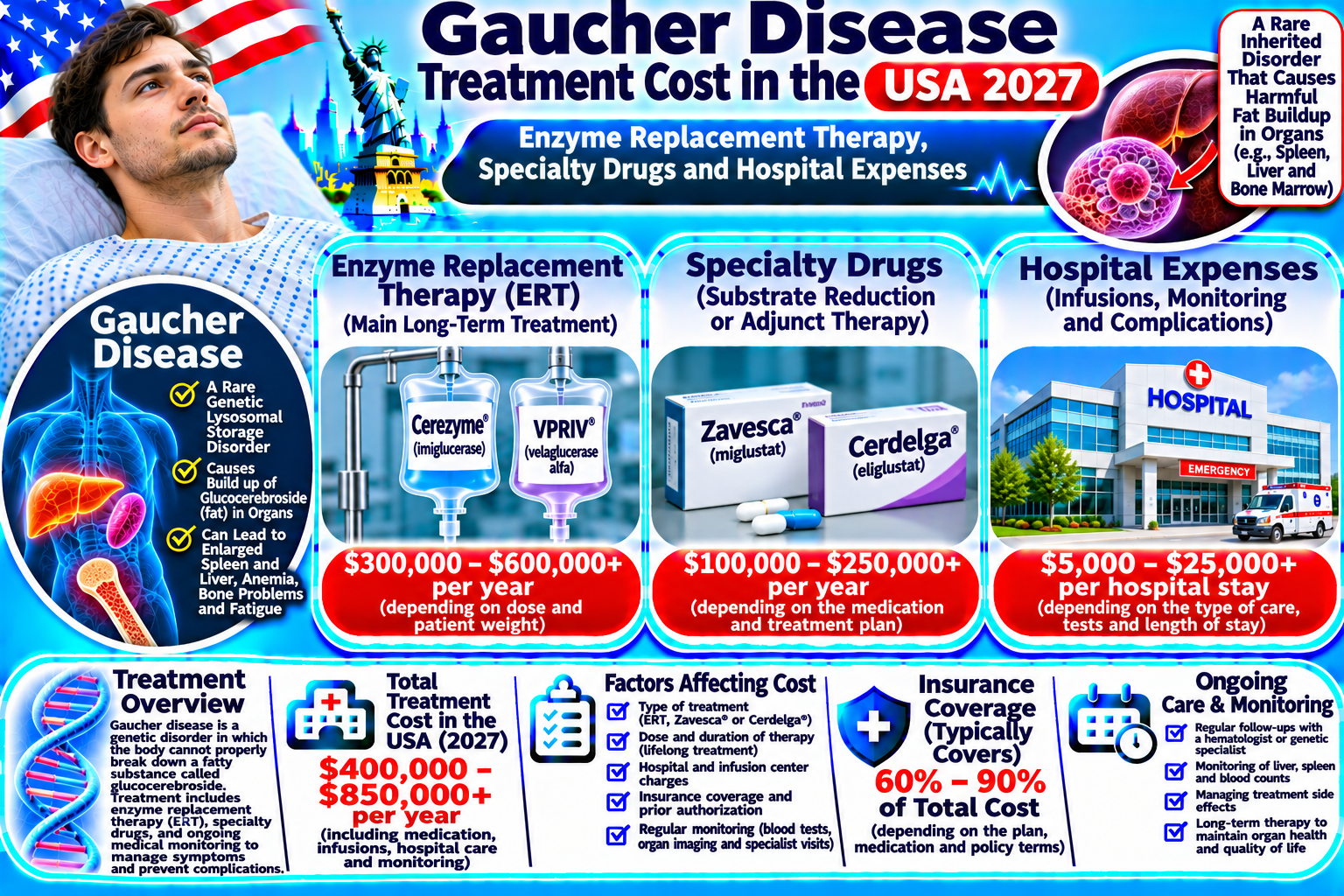
Understanding Gaucher disease treatment costs in the USA in 2027 is important for patients and families comparing enzyme replacement therapy, specialty medications, infusion center charges, hospital expenses, and health insurance coverage.
Modern treatments can improve many symptoms and help prevent serious complications. However, Gaucher disease therapies are expensive, and some patients require lifelong medication, regular laboratory testing, imaging, and specialist monitoring.
This comprehensive guide explains estimated American Gaucher disease treatment expenses for 2027, including enzyme replacement infusions, oral substrate reduction therapy, diagnostic testing, supportive care, insurance benefits, and financial assistance.
What Is Gaucher Disease?
Gaucher disease is a lysosomal storage disorder usually caused by disease-associated variants in the GBA1 gene. These changes reduce the activity of an enzyme called glucocerebrosidase.
When enzyme activity is insufficient, glucosylceramide and related substances accumulate in certain cells. Over time, this accumulation can damage organs, blood-forming tissues, and bones.
The condition is generally inherited in an autosomal recessive pattern, meaning an affected person usually inherits a disease-causing variant from each biological parent.
Types of Gaucher Disease
Type 1 Gaucher Disease
Type 1 is the most common form in the United States. It primarily affects the spleen, liver, blood cells, and skeleton without the characteristic primary neurological involvement of types 2 and 3.
Type 2 Gaucher Disease
Type 2 is a severe neurological form that begins during infancy. It causes rapidly progressive neurological complications and requires specialized supportive care.
Type 3 Gaucher Disease
Type 3 can affect both internal organs and the nervous system. Symptoms may progress more slowly than in type 2, and treatment must address multiple medical needs.
Common Symptoms of Gaucher Disease
- Enlarged spleen or liver.
- Persistent fatigue and weakness.
- Anemia and low platelet counts.
- Easy bruising or bleeding.
- Bone pain and fractures.
- Reduced bone density.
- Delayed growth in children.
- Abdominal discomfort.
- Neurological symptoms in types 2 and 3.
Symptoms vary substantially between individuals. Some patients have mild disease, while others require intensive medical management.
How Is Gaucher Disease Diagnosed?
Enzyme Activity Testing
Blood testing measures glucocerebrosidase enzyme activity. Reduced activity supports the diagnosis and helps distinguish Gaucher disease from other disorders.
GBA1 Genetic Testing
Genetic testing can identify disease-associated variants and support family counseling.
Blood Count and Biomarker Testing
Complete blood counts help evaluate anemia and platelet abnormalities. Disease-related biomarkers may also be used to monitor treatment response.
Imaging Studies
MRI, ultrasound, and other imaging tests assess liver and spleen size, bone involvement, and possible complications.
Specialist Evaluation
Metabolic disease specialists, hematologists, and other clinicians determine disease severity and appropriate treatment options.
Gaucher Disease Treatment Options
Enzyme Replacement Therapy
Enzyme replacement therapy, commonly called ERT, supplies a manufactured form of the enzyme that patients lack.
ERT is generally administered through intravenous infusions, often every two weeks, with dosage individualized according to body weight, disease severity, and treatment goals.
Cerezyme
Cerezyme contains imiglucerase and is used to treat eligible patients with non-neurological manifestations of Gaucher disease types 1 and 3.
VPRIV
VPRIV contains velaglucerase alfa and is an intravenous enzyme replacement treatment for eligible patients with type 1 Gaucher disease.
Elelyso
Elelyso contains taliglucerase alfa and is another enzyme replacement option for appropriate patients with type 1 Gaucher disease.
Oral Substrate Reduction Therapy
Substrate reduction therapy reduces the production of substances that accumulate in Gaucher disease. Oral medications include eliglustat and miglustat for specifically eligible patients.
Supportive Treatment
Additional care may involve treatment for anemia, bone pain, fractures, osteoporosis, and other complications.
Gaucher Disease Treatment Cost in the USA in 2027
Gaucher disease treatment expenses depend on medication selection, patient weight, infusion frequency, hospital setting, and insurance benefits.
Enzyme replacement therapy is frequently the largest recurring expense. Published American economic studies have reported annual ERT costs reaching several hundred thousand dollars per patient.
The following figures are illustrative 2027 budgeting estimates rather than verified national averages, guaranteed provider prices, or insurance-adjusted patient payments.
Estimated USA Treatment Cost Breakdown
| Treatment or Service | Estimated Cost (USD) |
|---|---|
| Specialist Consultation | $200–$900 per visit |
| Enzyme Activity Testing | $200–$1,000 |
| GBA1 Genetic Testing | $400–$2,500 |
| MRI or Organ Imaging | $500–$4,000 per study |
| Enzyme Replacement Therapy | $200,000–$800,000+ annually |
| Oral Specialty Medication | $100,000–$500,000+ annually |
| Infusion Administration | $300–$2,000+ per session |
| Routine Laboratory Monitoring | $100–$800 per testing episode |
| Bone Health Assessment | $200–$1,500+ |
| Hospitalization for Complications | $10,000–$60,000+ |
| Orthopedic Surgery | $20,000–$100,000+ |
Important: These are broad planning ranges, not confirmed 2027 prices. Medication and administration costs may overlap in bundled infusion bills. Actual charges depend heavily on weight-based dosing, treatment setting, insurance contracts, and clinical needs.
USA Gaucher Disease Annual Cost Comparison
Because this guide focuses on the United States, the following table compares American treatment scenarios rather than international countries.
| USA Treatment Scenario | Illustrative Annual Budget |
|---|---|
| Monitoring Without Disease-Specific Medication | $2,000–$15,000+ |
| Enzyme Replacement Therapy and Monitoring | $220,000–$850,000+ |
| Oral Substrate Reduction Therapy | $110,000–$530,000+ |
| Complex Disease With Hospital Care | Highly individualized |
These scenarios are hypothetical examples rather than standardized medical packages. Patients do not necessarily require every treatment listed.
Enzyme Replacement Therapy Expenses
ERT is a major treatment option for symptomatic Gaucher disease type 1 and selected non-neurological manifestations of type 3.
Infusions are commonly scheduled every two weeks, although dosing and treatment intervals must follow the prescribed product and specialist recommendations.
Expenses include medication acquisition, preparation, nursing services, infusion supplies, and monitoring.
Because treatment is often ongoing, small differences in infusion pricing can create substantial annual cost differences.
Cerezyme, VPRIV and Elelyso Costs
Cerezyme, VPRIV, and Elelyso replace deficient enzyme activity through intravenous administration.
Each medication has specific prescribing information, indications, and administration requirements.
Drug acquisition costs vary with the patient’s weight, prescribed units per kilogram, vial requirements, and negotiated pharmacy prices.
Patients should compare complete treatment quotations rather than medication prices alone.
Home Infusion Versus Hospital Infusion
Some clinically stable patients may receive ERT through supervised home infusion services.
Home treatment can reduce travel burdens and may lower certain facility expenses, although it is not suitable for everyone.
Hospital outpatient departments may charge additional facility fees. Independent infusion centers may use different reimbursement arrangements.
Insurance approval, clinical safety, nursing availability, and emergency support determine the appropriate setting.
Oral Specialty Drug Expenses
Eliglustat, marketed as Cerdelga, is an oral treatment for selected adults with type 1 Gaucher disease.
Its use depends on CYP2D6 metabolizer status and other clinical considerations. Drug interactions and certain cardiac risks require careful evaluation.
Miglustat is another oral option for certain adults with mild to moderate type 1 disease when enzyme replacement therapy is not a therapeutic option.
Oral treatment eliminates routine infusion appointments but does not necessarily eliminate high prescription expenses or monitoring requirements.
Hospital and Surgical Expenses
Hospitalization may be necessary for severe anemia, bleeding, fractures, infections, or other complications.
Advanced bone disease may require orthopedic evaluation and occasionally surgery.
Hospital bills may include:
- Emergency department services.
- Diagnostic imaging.
- Blood tests and transfusions.
- Specialist consultations.
- Medications and nursing care.
- Orthopedic procedures.
- Rehabilitation services.
Hospitalization is not required for every patient, and effective disease management may reduce certain complications.
Gaucher Disease Treatment With Health Insurance
Many comprehensive American insurance plans cover medically necessary Gaucher disease treatment, but expensive medications commonly require prior authorization.
Insurance companies may request genetic or enzyme testing results, specialist documentation, and evidence supporting the prescribed treatment.
Important insurance considerations include:
- Annual deductible and out-of-pocket maximum.
- Enzyme replacement therapy authorization.
- Specialty pharmacy requirements.
- Home infusion coverage.
- Hospital and infusion center networks.
- Oral specialty drug formulary coverage.
- Copayments and coinsurance.
- Laboratory and imaging benefits.
Patients should confirm both medication and administration coverage before scheduling treatment.
Medicare and Medicaid Coverage
Medicare may cover qualifying Gaucher disease services for eligible beneficiaries, depending on medical necessity and applicable benefit rules.
Part B may cover certain physician-administered infusion treatments, while Part D may cover eligible oral prescription medications.
Medicaid benefits vary by state and may require specialized authorization for high-cost therapies.
Factors Influencing Gaucher Disease Treatment Prices
1. Medication Selection
Different enzyme replacement and oral therapies have different acquisition and administration expenses.
2. Patient Weight and Dosage
Weight-based ERT dosing can significantly affect the number of medication vials required.
3. Treatment Location
Hospital outpatient departments, independent infusion centers, and home infusion providers may charge different amounts.
4. Disease Severity
Patients with advanced bone, blood, or organ complications may require additional medical services.
5. Insurance Coverage
Deductibles, negotiated rates, prior authorization, and network restrictions influence patient expenses.
6. Geographic Location
Healthcare charges vary across American states, cities, and hospital systems.
How to Reduce Gaucher Disease Treatment Costs
- Verify insurance coverage before starting therapy.
- Request complete infusion cost estimates.
- Compare covered infusion settings.
- Review specialty medication authorization rules.
- Ask about manufacturer patient assistance programs.
- Explore rare disease financial support resources.
- Use participating laboratories and specialists.
- Consult a hospital financial counselor.
Patients should never discontinue prescribed therapy solely because of cost without consulting their specialist.
Frequently Asked Questions
How much does Gaucher disease treatment cost in the USA in 2027?
Illustrative annual expenses can reach several hundred thousand dollars for patients receiving enzyme replacement therapy or expensive oral specialty medications.
How often is enzyme replacement therapy administered?
Many patients receive infusions approximately every two weeks, although treatment schedules depend on the medication and individual needs.
Does insurance cover Gaucher disease treatment?
Many comprehensive plans cover eligible treatments, but prior authorization and patient cost-sharing may apply.
Can Gaucher disease be cured?
There is currently no established universal cure. Available treatments can improve many symptoms and reduce complications, but neurological disease may remain difficult to treat.
Is home infusion available?
Some patients may qualify for supervised home infusion when clinically appropriate and approved by their insurer.
Conclusion
Gaucher disease treatment costs in the USA in 2027 depend on enzyme replacement therapy, oral specialty medications, infusion services, hospital expenses, and health insurance coverage.
Patients should compare complete treatment estimates, verify insurance benefits, and work with experienced metabolic disease specialists to develop individualized care plans.
Early diagnosis, appropriate treatment, regular monitoring, and careful financial planning can help families manage the substantial long-term expenses associated with Gaucher disease.
Medical Disclaimer: This article provides general educational and financial planning information only. It does not replace professional medical advice, diagnosis, or treatment. All 2027 cost ranges are illustrative estimates and must be verified directly with healthcare providers, infusion centers, pharmacies, and insurance companies.
