Introduction
Acromegaly is a rare hormonal disorder that develops when the body produces excessive growth hormone, usually because of a benign tumor in the pituitary gland. Over time, elevated growth hormone increases insulin-like growth factor 1 (IGF-1), causing changes in facial features, enlargement of the hands and feet, joint pain, and potentially serious cardiovascular and metabolic complications.

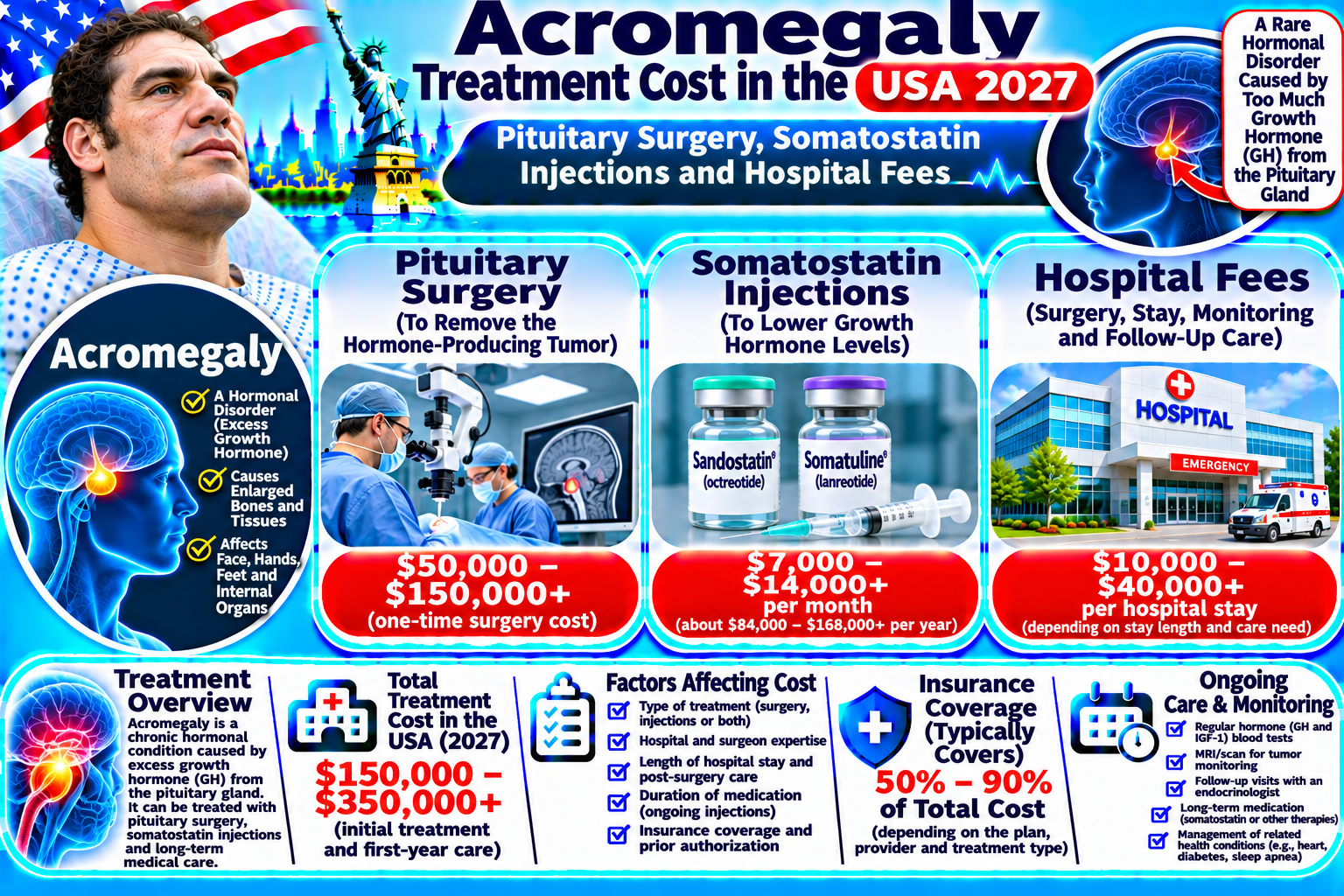
Understanding acromegaly treatment costs in the USA in 2027 is important for patients and families comparing pituitary surgery, somatostatin injections, prescription medications, radiation therapy, hospital expenses, and health insurance coverage.
Treatment often involves specialized medical care. Some patients achieve long-term biochemical remission after surgery, while others require ongoing medication, additional procedures, or lifelong monitoring.
This comprehensive guide explains estimated American acromegaly treatment expenses for 2027, including diagnostic testing, transsphenoidal pituitary surgery, injectable medications, hospital charges, specialist consultations, insurance benefits, and financial assistance.
What Is Acromegaly?
Acromegaly occurs when excess growth hormone stimulates the liver and other tissues to produce increased amounts of IGF-1.
In most cases, the underlying cause is a growth hormone-secreting pituitary adenoma. These tumors are generally noncancerous, although their size and location can affect nearby structures.
The disorder usually develops gradually during adulthood. Because physical changes occur slowly, diagnosis may be delayed for several years.
Early treatment is important because prolonged hormone excess can increase the risk of diabetes, high blood pressure, sleep apnea, heart disease, and joint complications.
Common Symptoms of Acromegaly
- Enlargement of the hands and feet.
- Changes in facial appearance.
- Prominent jaw or forehead.
- Increased spacing between teeth.
- Excessive sweating.
- Headaches and fatigue.
- Joint pain and stiffness.
- Snoring and obstructive sleep apnea.
- High blood pressure or diabetes.
- Vision changes when a tumor compresses nearby structures.
Symptoms differ between individuals and depend partly on tumor size, hormone levels, and the duration of untreated disease.
How Is Acromegaly Diagnosed?
IGF-1 Blood Testing
Measurement of age-adjusted IGF-1 is an important initial test when acromegaly is suspected. Persistently elevated results may require additional evaluation.
Growth Hormone Suppression Testing
An oral glucose tolerance test may be used when the diagnosis remains uncertain. In healthy individuals, growth hormone generally decreases after glucose administration.
Pituitary MRI
Magnetic resonance imaging helps identify pituitary tumors, assess their size, and determine whether nearby structures are affected.
Visual Field Examination
Patients with tumors close to the optic pathways may need formal visual field testing.
Additional Health Assessments
Clinicians may evaluate blood pressure, blood glucose, sleep apnea, heart health, and other complications associated with excessive growth hormone.
Acromegaly Treatment Options
Transsphenoidal Pituitary Surgery
Transsphenoidal surgery is commonly the preferred initial treatment when the pituitary tumor can be removed safely.
Surgeons usually approach the pituitary gland through the nasal passages using specialized instruments and, frequently, an endoscope.
The goal is to remove the tumor, reduce growth hormone production, and preserve normal pituitary function.
Somatostatin Receptor Ligands
Somatostatin-based medications reduce growth hormone secretion. Common options include octreotide, lanreotide, and pasireotide.
Long-acting formulations are frequently administered through injections at scheduled intervals.
Pegvisomant
Pegvisomant, marketed as Somavert, blocks growth hormone activity at its receptor and can reduce IGF-1 levels.
It is generally administered through subcutaneous injections and requires ongoing monitoring.
Cabergoline
Cabergoline is an oral dopamine agonist sometimes used in selected patients, particularly when hormone elevations are relatively mild.
Radiation Therapy
Radiation may be considered when surgery and medications do not provide adequate disease control or when residual tumor requires additional treatment.
Long-Term Monitoring
Patients require regular hormone testing and specialist follow-up to assess disease control, tumor changes, and possible treatment complications.
Acromegaly Treatment Cost in the USA in 2027
Acromegaly treatment expenses depend on tumor size, surgical complexity, medication selection, treatment duration, hospital setting, and insurance coverage.
Surgery can create substantial upfront expenses, while long-term injectable medications may account for the largest recurring annual costs.
The following amounts are illustrative 2027 budgeting estimates, not verified national averages, guaranteed provider quotations, or actual patient out-of-pocket expenses.
Estimated USA Treatment Cost Breakdown
| Treatment or Service | Estimated Cost (USD) |
|---|---|
| Endocrinologist Consultation | $200–$800 per visit |
| IGF-1 and Growth Hormone Testing | $100–$600 per testing episode |
| Oral Glucose Suppression Test | $200–$1,000 |
| Pituitary MRI | $700–$4,000+ |
| Transsphenoidal Pituitary Surgery | $30,000–$120,000+ |
| Hospital and Anesthesia Charges | $10,000–$50,000+ if separately billed |
| Long-Acting Octreotide | $3,000–$12,000+ monthly |
| Lanreotide Injections | $5,000–$15,000+ monthly |
| Pasireotide Injections | $8,000–$20,000+ monthly |
| Pegvisomant Medication | $8,000–$30,000+ monthly |
| Generic Cabergoline | $20–$300+ monthly |
| Radiation Treatment Course | $10,000–$60,000+ |
| Hospitalization for Complications | $10,000–$70,000+ |
Important: These figures are hypothetical planning ranges. Surgical quotations may already include hospital and anesthesia fees, so those charges should not automatically be added again. Medication prices vary with dose, product, pharmacy, insurance contracts, and available discounts.
USA Acromegaly Treatment Cost Comparison
Because this guide focuses on the United States, the following table compares American treatment scenarios rather than international countries.
| USA Treatment Scenario | Illustrative Budget |
|---|---|
| Diagnosis and Routine Monitoring | $2,000–$12,000+ |
| Pituitary Surgery Treatment Year | $35,000–$150,000+ |
| Long-Acting Somatostatin Therapy | $40,000–$250,000+ annually |
| Pegvisomant-Based Treatment | $100,000–$380,000+ annually |
| Complex Disease With Multiple Treatments | Highly individualized |
These scenarios are illustrative examples, not standardized treatment packages. Patients do not necessarily require every medication or procedure listed.
Pituitary Surgery Costs for Acromegaly
Transsphenoidal pituitary surgery is a common first-line treatment for patients with acromegaly. It aims to remove the growth hormone-producing tumor while preserving normal pituitary function.
The total surgical expense depends on tumor size, anatomical complexity, surgeon expertise, hospital charges, anesthesia, and postoperative monitoring.
Small tumors may be easier to remove completely, while larger tumors extending into nearby structures can require more complicated procedures.
Successful surgery may reduce or eliminate the need for expensive long-term medications, although continued hormone monitoring remains important.
Hospital Fees and Surgical Expenses
Pituitary surgery bills can include several separate medical services. Patients should request a complete written estimate before scheduling treatment.
Common hospital charges include:
- Neurosurgeon and surgical assistant fees.
- Operating room and surgical equipment charges.
- General anesthesia services.
- Hospital room and nursing care.
- Laboratory testing and diagnostic imaging.
- Postoperative medications.
- Intensive monitoring when medically necessary.
- Follow-up consultations and hormone testing.
Hospital stay length varies according to recovery and complications. Additional care may be necessary if patients experience cerebrospinal fluid leakage, hormonal deficiencies, infection, or electrolyte abnormalities.
Somatostatin Injection Costs
Somatostatin receptor ligands reduce growth hormone secretion and can improve biochemical control in patients with persistent or recurrent acromegaly.
Long-acting octreotide and lanreotide are commonly used medical treatments. They are usually administered at scheduled intervals, often approximately monthly, depending on the formulation and clinical response.
These medications may also reduce tumor size in selected patients.
Potential adverse effects include digestive symptoms, gallstones, and changes in blood glucose regulation.
Octreotide Treatment Expenses
Octreotide is available in different formulations, including long-acting injections and oral capsules for appropriately selected patients.
Long-acting injectable octreotide is typically administered by a healthcare professional, creating potential medication and administration charges.
Oral octreotide may reduce the need for regular injections, but its cost and eligibility requirements differ from injectable formulations.
Patients should compare total annual expenses, including medication, administration, monitoring, and insurance cost-sharing.
Lanreotide Injection Costs
Lanreotide is a long-acting somatostatin analogue administered through deep subcutaneous injection.
It is used to reduce growth hormone and IGF-1 levels in eligible patients with acromegaly.
Expenses depend on prescribed strength, treatment interval, pharmacy pricing, and whether administration occurs in a clinic or an approved alternative setting.
Some patients may be eligible for trained caregiver administration under appropriate medical supervision and prescribing instructions.
Pasireotide Treatment Expenses
Pasireotide is another long-acting somatostatin analogue used in selected patients whose disease remains inadequately controlled or for whom surgery is not appropriate.
It may improve hormone control but carries a significant risk of elevated blood glucose and diabetes.
Patients require appropriate monitoring of glucose levels, liver function, heart rhythm, and other safety parameters.
These additional assessments may increase overall treatment expenses.
Pegvisomant Medication Costs
Pegvisomant blocks growth hormone receptors and helps normalize IGF-1 levels without directly suppressing growth hormone production.
It is administered through subcutaneous injections, generally on a daily schedule after treatment initiation.
Dosage is adjusted according to biochemical response, making total medication expenses highly individualized.
Patients require liver function testing and ongoing pituitary imaging when clinically indicated.
Newer Oral Treatment Options
Newer oral medications have expanded the available treatment options for acromegaly.
These include oral octreotide formulations and paltusotine, marketed as Palsonify, which received FDA approval in 2025 for eligible adults with acromegaly.
Oral treatment may be convenient for some patients, although suitability depends on disease control, prescribing criteria, tolerability, and insurance coverage.
Patients should request individualized pharmacy quotations because prices and reimbursement arrangements may differ considerably.
Radiation Therapy Costs
Radiation therapy may be recommended when pituitary surgery does not fully control the tumor or when medication is insufficient.
Treatment options include stereotactic radiosurgery and fractionated radiation therapy.
Expenses depend on the treatment technique, number of sessions, imaging requirements, and facility charges.
Hormone levels may improve gradually after radiation, sometimes over several years. Continued medication and monitoring may therefore remain necessary.
Radiation can also affect normal pituitary hormone production, potentially creating long-term replacement hormone expenses.
Long-Term Monitoring Expenses
Acromegaly often requires ongoing follow-up even after successful surgery or medication treatment.
Long-term care may include:
- IGF-1 blood testing.
- Growth hormone assessment when appropriate.
- Periodic pituitary MRI.
- Endocrinologist consultations.
- Diabetes and blood pressure monitoring.
- Sleep apnea evaluation.
- Assessment of pituitary hormone deficiencies.
- Monitoring for medication side effects.
Regular monitoring helps identify persistent disease, recurrence, and treatment-related complications before they become more serious.
Acromegaly Treatment With Health Insurance
Many comprehensive American health insurance plans cover medically necessary acromegaly treatment, including pituitary surgery, specialist appointments, diagnostic imaging, and eligible prescription medications.
However, expensive specialty drugs often require prior authorization and detailed clinical documentation.
Important insurance considerations include:
- Annual deductible and out-of-pocket maximum.
- Neurosurgeon and hospital network participation.
- Preauthorization for pituitary surgery.
- Somatostatin injection coverage.
- Specialty pharmacy requirements.
- Coverage for oral acromegaly medications.
- Radiation therapy authorization.
- Copayments and coinsurance.
Patients should verify whether a medication is covered under the medical benefit or prescription drug benefit, as this can affect billing and cost-sharing.
Medicare and Medicaid Coverage
Medicare may cover qualifying acromegaly treatment for eligible beneficiaries under applicable medical necessity rules.
Medicare Part A may cover eligible inpatient hospital services, while Part B may cover certain outpatient services and physician-administered treatments.
Medicare Part D may cover eligible prescription medications according to plan formularies and authorization requirements.
Medicaid coverage varies by state and may include specialist care, surgery, and eligible specialty medications.
Acromegaly Treatment Without Insurance
Uninsured patients may face substantial expenses for pituitary surgery, hospitalization, imaging, and specialty medications.
Patients should request itemized estimates from hospitals and discuss financial assistance with the billing department.
Manufacturer patient assistance programs may provide support for qualifying individuals who require expensive medications.
Eligibility restrictions apply, and certain manufacturer copayment programs cannot be used with federal healthcare benefits.
Factors Influencing Acromegaly Treatment Prices
1. Tumor Size and Surgical Complexity
Large or invasive pituitary tumors may require more complicated procedures and additional hospital services.
2. Medication Selection
Somatostatin injections, pegvisomant, cabergoline, and newer oral medications have different prices and monitoring requirements.
3. Treatment Duration
Patients requiring lifelong medication generally face higher cumulative expenses than those achieving sustained remission after surgery.
4. Hospital Location
Hospital charges and specialist fees vary across American cities, states, and healthcare systems.
5. Insurance Coverage
Deductibles, negotiated rates, network restrictions, and prior authorization influence patient financial responsibility.
6. Additional Health Conditions
Diabetes, sleep apnea, hypertension, cardiovascular disease, and joint complications may increase total healthcare spending.
How to Reduce Acromegaly Treatment Costs
- Verify insurance benefits before scheduling surgery.
- Request a complete hospital and surgeon estimate.
- Choose participating specialists when possible.
- Review specialty medication authorization requirements.
- Ask about manufacturer patient assistance programs.
- Compare covered pharmacy and administration options.
- Explore Medicare or Medicaid eligibility.
- Consult a hospital financial counselor.
Patients should never discontinue prescribed medication or delay necessary specialist care solely because of cost without medical guidance.
Frequently Asked Questions
How much does acromegaly treatment cost in the USA in 2027?
Illustrative expenses may range from several thousand dollars for monitoring to more than $100,000 for pituitary surgery or ongoing specialty medication treatment.
How much does pituitary surgery cost?
Estimated American surgical expenses may range from approximately $30,000 to more than $120,000, depending on hospital charges, tumor complexity, and included services.
Are somatostatin injections expensive?
Yes. Long-acting somatostatin medications can cost thousands of dollars per treatment before insurance adjustments.
Does insurance cover acromegaly treatment?
Many comprehensive plans cover medically necessary treatment, although prior authorization and patient cost-sharing may apply.
Can acromegaly be cured with surgery?
Some patients achieve long-term biochemical remission after successful tumor removal. Others require medication, radiation, or additional treatment.
Is lifelong monitoring necessary?
Ongoing monitoring is generally recommended because hormone abnormalities can persist or recur after treatment.
Conclusion
Acromegaly treatment costs in the USA in 2027 depend on pituitary surgery, somatostatin injections, prescription medications, radiation therapy, hospital fees, and health insurance coverage.
Patients should compare complete treatment estimates, verify insurance authorization, and work with experienced endocrinologists and pituitary specialists.
Early diagnosis, appropriate treatment, regular hormone monitoring, and careful financial planning can help patients manage the long-term expenses associated with acromegaly.
Medical Disclaimer: This article provides general educational and financial planning information only. It does not replace professional medical advice, diagnosis, or treatment. All 2027 cost ranges are illustrative estimates and should be verified directly with healthcare providers, hospitals, pharmacies, and insurance companies.
