Introduction
Cystic fibrosis (CF) is a lifelong inherited disorder that primarily affects the lungs, digestive system, and other organs. It causes thick, sticky mucus to accumulate in the airways, increasing the risk of respiratory infections, inflammation, and progressive lung damage. Modern treatments have significantly improved survival and quality of life, but medical expenses can remain substantial.

Understanding cystic fibrosis treatment costs in the USA in 2027 is important for patients and families comparing CFTR modulator medications, airway clearance therapy, inhaled drugs, digestive enzyme supplements, hospital treatment, and health insurance coverage.
Some patients require daily specialty medications costing hundreds of thousands of dollars annually before insurance adjustments. Others also need frequent respiratory therapy, nutritional support, laboratory monitoring, and hospitalization for pulmonary complications.
This guide examines estimated American cystic fibrosis treatment expenses for 2027, including prescription drugs, lung therapy, diagnostic testing, hospital services, insurance benefits, and financial assistance.
What Is Cystic Fibrosis?
Cystic fibrosis is caused by disease-associated variants in the cystic fibrosis transmembrane conductance regulator gene, known as CFTR.
The CFTR protein helps regulate the movement of chloride and water across cell surfaces. When it does not function properly, mucus becomes unusually thick and difficult to clear.
This can obstruct airways, promote infections, and interfere with pancreatic enzyme delivery to the intestines.
CF is generally inherited in an autosomal recessive pattern. An affected person usually inherits a disease-causing CFTR variant from each biological parent.
Common Symptoms of Cystic Fibrosis
- Persistent coughing and thick mucus production.
- Recurring lung or sinus infections.
- Wheezing and shortness of breath.
- Poor weight gain or difficulty growing.
- Greasy or bulky stools.
- Digestive discomfort and constipation.
- Excessively salty sweat.
- Fatigue and reduced exercise tolerance.
- Complications such as cystic fibrosis-related diabetes.
Symptoms and disease severity differ between individuals. Early diagnosis and consistent specialist care can improve long-term outcomes.
How Is Cystic Fibrosis Diagnosed?
Newborn Screening
Cystic fibrosis is included in newborn screening programs throughout the United States. Abnormal screening results require additional diagnostic evaluation.
Sweat Chloride Testing
The sweat chloride test measures salt concentration in sweat and is an important method of confirming CF.
CFTR Genetic Testing
Genetic testing identifies CFTR variants and helps determine whether a patient may qualify for specific CFTR modulator medications.
Pulmonary Function Testing
Spirometry and other breathing tests assess lung function and monitor changes over time.
Respiratory Cultures and Imaging
Sputum cultures, chest imaging, and laboratory studies help clinicians evaluate infections, inflammation, and complications.
Cystic Fibrosis Treatment Options
CFTR Modulator Medications
CFTR modulators target the underlying protein dysfunction in patients with eligible CFTR variants. Available options include Trikafta, Alyftrek, Kalydeco, and other genotype-specific therapies.
These medications are not suitable for every patient. Eligibility depends on genetic findings, age, prescribing information, and clinical considerations.
Airway Clearance Therapy
Airway clearance techniques help remove mucus from the lungs. Treatment may include chest physiotherapy, oscillating positive expiratory pressure devices, and high-frequency chest wall oscillation vests.
Inhaled Medications
Inhaled therapies such as dornase alfa and hypertonic saline can help manage mucus and airway clearance.
Antibiotic Treatment
Patients with bacterial respiratory infections may require oral, inhaled, or intravenous antibiotics.
Pancreatic Enzyme Replacement
Many patients need pancreatic enzyme replacement therapy to improve digestion and nutrient absorption.
Nutritional Support
High-calorie nutrition plans, vitamin supplementation, and specialist dietary counseling can support growth and overall health.
Lung Transplantation
For selected patients with advanced lung disease, lung transplantation may be considered after comprehensive specialist evaluation.
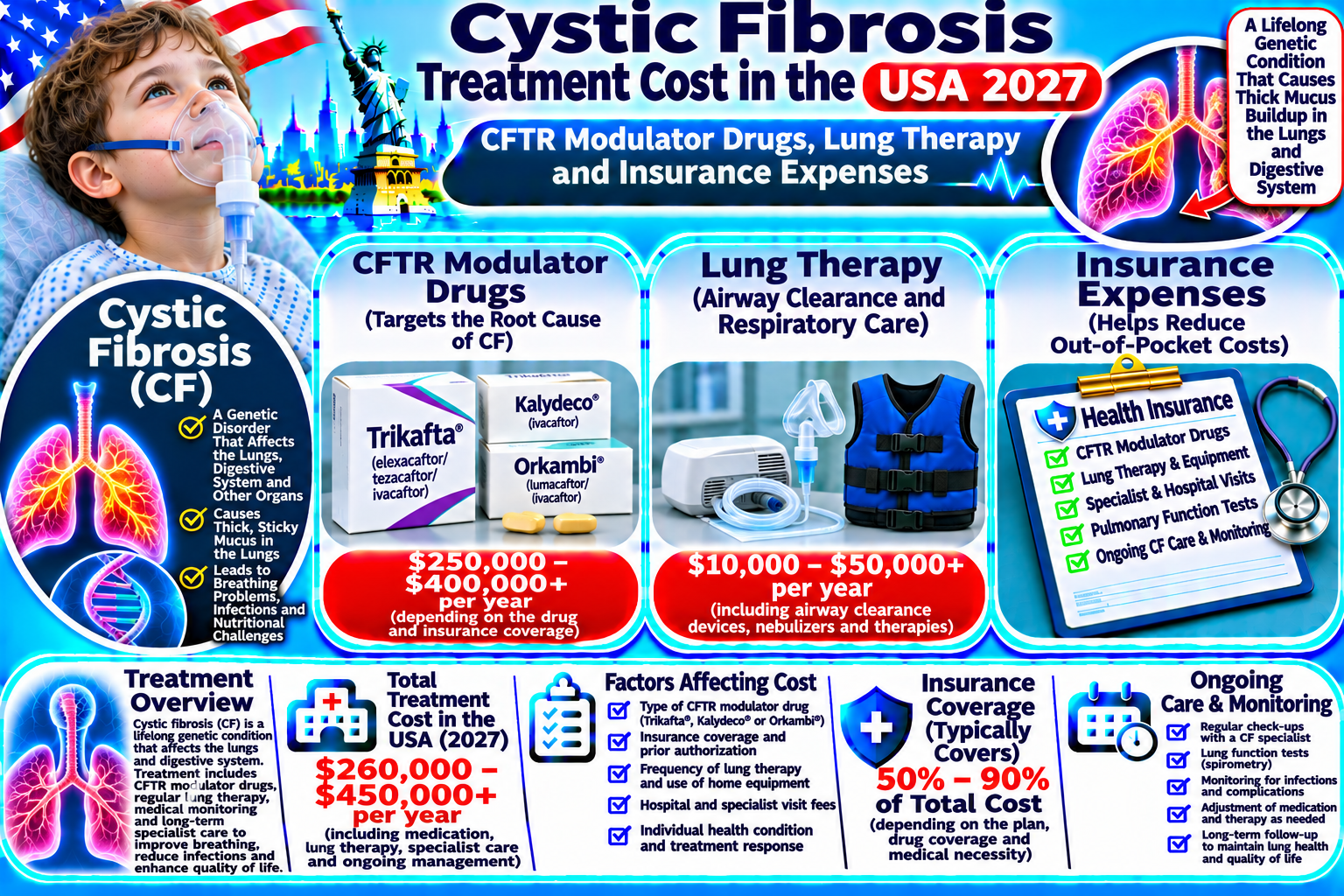
Cystic Fibrosis Treatment Cost in the USA in 2027
Cystic fibrosis treatment expenses depend on medication selection, genetic eligibility, respiratory disease severity, hospital utilization, and insurance coverage.
CFTR modulators can account for a large portion of annual treatment spending. Hospitalization and long-term respiratory support can further increase total expenses.
The following figures are illustrative 2027 budgeting estimates, not confirmed future prices, verified national averages, or guaranteed patient payments.
Estimated USA Treatment Cost Breakdown
| Treatment or Service | Estimated Cost (USD) |
|---|---|
| CF Specialist Consultation | $200–$900 per visit |
| Sweat Chloride Testing | $100–$600 |
| CFTR Genetic Testing | $300–$3,000+ |
| CFTR Modulator Medication | $250,000–$450,000+ annually |
| Inhaled Respiratory Medications | $3,000–$40,000+ annually |
| Pancreatic Enzyme Replacement | $3,000–$25,000+ annually |
| Airway Clearance Equipment | $500–$20,000+ per purchase |
| Pulmonary Function Testing | $100–$800 per test |
| IV Antibiotic Treatment Course | $5,000–$40,000+ |
| Hospitalization for Lung Infection | $15,000–$100,000+ |
| Lung Transplant Treatment Episode | $800,000–$2 million+ |
Important: These are hypothetical gross-price planning ranges. Actual charges depend on medication dosage, negotiated insurance rates, clinical needs, and healthcare setting. One-time equipment expenses and transplant costs should not be treated as routine annual charges.
USA Cystic Fibrosis Annual Cost Comparison
Because this article focuses on the United States, the following table compares different American treatment scenarios rather than international countries.
| USA Treatment Scenario | Illustrative Annual Budget |
|---|---|
| Routine Care Without CFTR Modulator | $10,000–$70,000+ |
| CFTR Modulator and Routine Monitoring | $270,000–$500,000+ |
| Advanced Lung Disease With Hospital Care | $80,000–$600,000+ |
| Lung Transplant Year | $850,000–$2.2 million+ |
These scenarios are illustrative rather than standardized treatment packages. Expenses vary substantially between patients, and some treatment costs overlap.
CFTR Modulator Drug Costs
CFTR modulators are among the most important advances in cystic fibrosis treatment. These medicines improve the function of the defective CFTR protein in patients with eligible genetic variants.
Trikafta contains elexacaftor, tezacaftor, and ivacaftor. Alyftrek contains vanzacaftor, tezacaftor, and deutivacaftor. Both are important treatment options for appropriately selected patients.
Other modulators include Kalydeco, Symdeko, and Orkambi. The appropriate medication depends on genetic eligibility, age, treatment response, and safety considerations.
CFTR modulators can improve lung function and reduce pulmonary exacerbations in many patients, but they do not eliminate the need for regular specialist care.
These medicines may require liver function monitoring and evaluation for drug interactions. Some products carry serious liver injury warnings.
Trikafta and Alyftrek Expenses
Trikafta and Alyftrek are high-cost prescription treatments that can create substantial annual pharmacy expenses before insurance adjustments.
Trikafta is generally taken in a morning and evening dosing schedule, while Alyftrek is administered once daily according to prescribing instructions.
Both medications require individualized assessment, and patients should not switch therapies without consulting their cystic fibrosis specialist.
Specialty pharmacies often coordinate medication delivery, refill management, insurance authorization, and patient support.
Airway Clearance Therapy Costs
Airway clearance therapy helps remove mucus from the lungs and is an important component of cystic fibrosis management.
Patients may use manual chest physiotherapy, positive expiratory pressure devices, breathing techniques, or high-frequency chest wall oscillation equipment.
Some devices require substantial initial investment, while others involve smaller recurring expenses.
Insurance coverage depends on medical necessity, equipment benefits, and supplier network participation.
Inhaled Medication Expenses
Inhaled therapies may include dornase alfa, hypertonic saline, and antibiotics used to manage chronic respiratory infections.
Dornase alfa helps break down DNA within thick airway secretions, making mucus easier to clear.
Inhaled antibiotics may be prescribed for selected patients with chronic bacterial infections, including Pseudomonas aeruginosa.
Medication expenses depend on treatment cycles, drug selection, pharmacy pricing, and insurance coverage.
Pancreatic Enzyme Replacement Costs
Many patients with cystic fibrosis develop pancreatic insufficiency, preventing normal digestion and absorption of nutrients.
Pancreatic enzyme replacement therapy helps patients digest fats, proteins, and carbohydrates.
Medication requirements depend on age, body weight, meals, snacks, and nutritional needs.
Patients may also require fat-soluble vitamin supplements and regular dietary monitoring.
Hospital Treatment for Lung Infections
Pulmonary exacerbations can cause worsening cough, increased mucus production, breathing difficulties, and reduced lung function.
Severe episodes may require hospitalization and intravenous antibiotics.
Hospital expenses may include:
- Emergency department evaluation.
- Intravenous antibiotic medications.
- Respiratory therapy services.
- Chest imaging and laboratory testing.
- Specialist consultations.
- Oxygen or other respiratory support.
- Inpatient nursing and monitoring.
Length of stay, medication requirements, and clinical complications significantly influence the final hospital bill.
Lung Transplantation Expenses
Lung transplantation may be considered for selected patients with advanced cystic fibrosis-related lung disease.
Costs can include pre-transplant evaluation, surgery, intensive care, hospitalization, immunosuppressive medications, and rehabilitation.
After transplantation, patients require lifelong specialist monitoring and medications to reduce organ rejection risk.
Not every patient with advanced disease is eligible for transplantation. Decisions involve comprehensive medical assessment.
Cystic Fibrosis Treatment With Health Insurance
Many comprehensive American health insurance plans cover medically necessary cystic fibrosis treatment, including specialist consultations, eligible medications, respiratory therapy, and hospital services.
However, high-cost CFTR modulators frequently require prior authorization and specialty pharmacy arrangements.
Important insurance considerations include:
- Annual deductible and out-of-pocket maximum.
- CFTR modulator formulary coverage.
- Prior authorization requirements.
- Specialty pharmacy participation.
- Airway clearance equipment benefits.
- Inhaled antibiotic coverage.
- Hospital network participation.
- Pancreatic enzyme medication benefits.
- Copayments and coinsurance.
Patients should distinguish between the total amount billed by healthcare providers and the amount they personally owe after insurance adjustments.
Medicare and Medicaid Coverage
Medicare may cover qualifying cystic fibrosis services for eligible beneficiaries, depending on medical necessity and applicable benefit rules.
Medicare Part B may cover certain outpatient services and medical equipment, while Part D may cover eligible prescription medications.
Medicaid and the Children’s Health Insurance Program may provide important coverage for eligible patients and families.
Benefits vary by state, insurance arrangement, and treatment category.
Factors Influencing Cystic Fibrosis Treatment Prices
1. CFTR Modulator Selection
Different specialty medications have different prices, dosing requirements, and insurance authorization rules.
2. Disease Severity
Patients with advanced lung disease or frequent infections may require additional medications, hospital care, and respiratory support.
3. Hospital and Treatment Setting
Hospital-based services, outpatient clinics, and home-based therapies may have different reimbursement arrangements.
4. Insurance Coverage
Deductibles, negotiated rates, formulary restrictions, and network participation influence patient financial responsibility.
5. Additional Complications
Pancreatic insufficiency, diabetes, liver disease, and nutritional problems may increase healthcare expenses.
6. Geographic Location
Hospital charges, specialist availability, and healthcare costs vary across American states and cities.
How to Reduce Cystic Fibrosis Treatment Costs
- Verify insurance coverage before starting specialty medications.
- Request written estimates for expensive treatments.
- Use participating cystic fibrosis care centers.
- Review manufacturer patient assistance eligibility.
- Compare covered specialty pharmacy options.
- Ask about financial counseling and insurance appeals.
- Review Medicaid or other public insurance eligibility.
- Confirm respiratory equipment coverage before purchase.
Patients should not discontinue prescribed medications or airway clearance therapy solely because of cost without consulting their healthcare team.
Frequently Asked Questions
How much does cystic fibrosis treatment cost in the USA in 2027?
Illustrative annual expenses may range from several thousand dollars for limited routine services to hundreds of thousands of dollars when high-cost CFTR modulators and extensive medical care are required.
How expensive are CFTR modulator medications?
Some CFTR modulators have historically carried American list prices exceeding $300,000 annually. Actual prices and patient payments vary with insurance and pharmacy agreements.
Does insurance cover Trikafta and Alyftrek?
Many comprehensive plans cover these medications for eligible patients, although prior authorization and cost-sharing requirements may apply.
Is airway clearance therapy necessary?
Airway clearance remains an important part of care for many patients, but treatment plans should be individualized by a cystic fibrosis specialist.
Can cystic fibrosis be cured?
There is currently no established universal cure. Modern therapies can substantially improve outcomes, but patients generally require ongoing medical management.
Can patients receive financial assistance?
Eligible patients may receive support through manufacturer programs, charitable organizations, insurance counseling, and public coverage programs.
Conclusion
Cystic fibrosis treatment costs in the USA in 2027 depend on CFTR modulator drugs, lung therapy, inhaled medications, digestive enzyme supplements, hospital expenses, and insurance coverage.
Patients and families should compare complete treatment estimates, verify specialty medication benefits, and work closely with experienced cystic fibrosis care teams.
Early diagnosis, consistent treatment, infection prevention, nutritional support, and careful financial planning can help manage the long-term expenses associated with cystic fibrosis.
Medical Disclaimer: This article provides general educational and financial planning information only. It does not replace professional medical advice, diagnosis, or treatment. All 2027 cost ranges are illustrative estimates and should be verified directly with healthcare providers, pharmacies, hospitals, and insurance companies.
